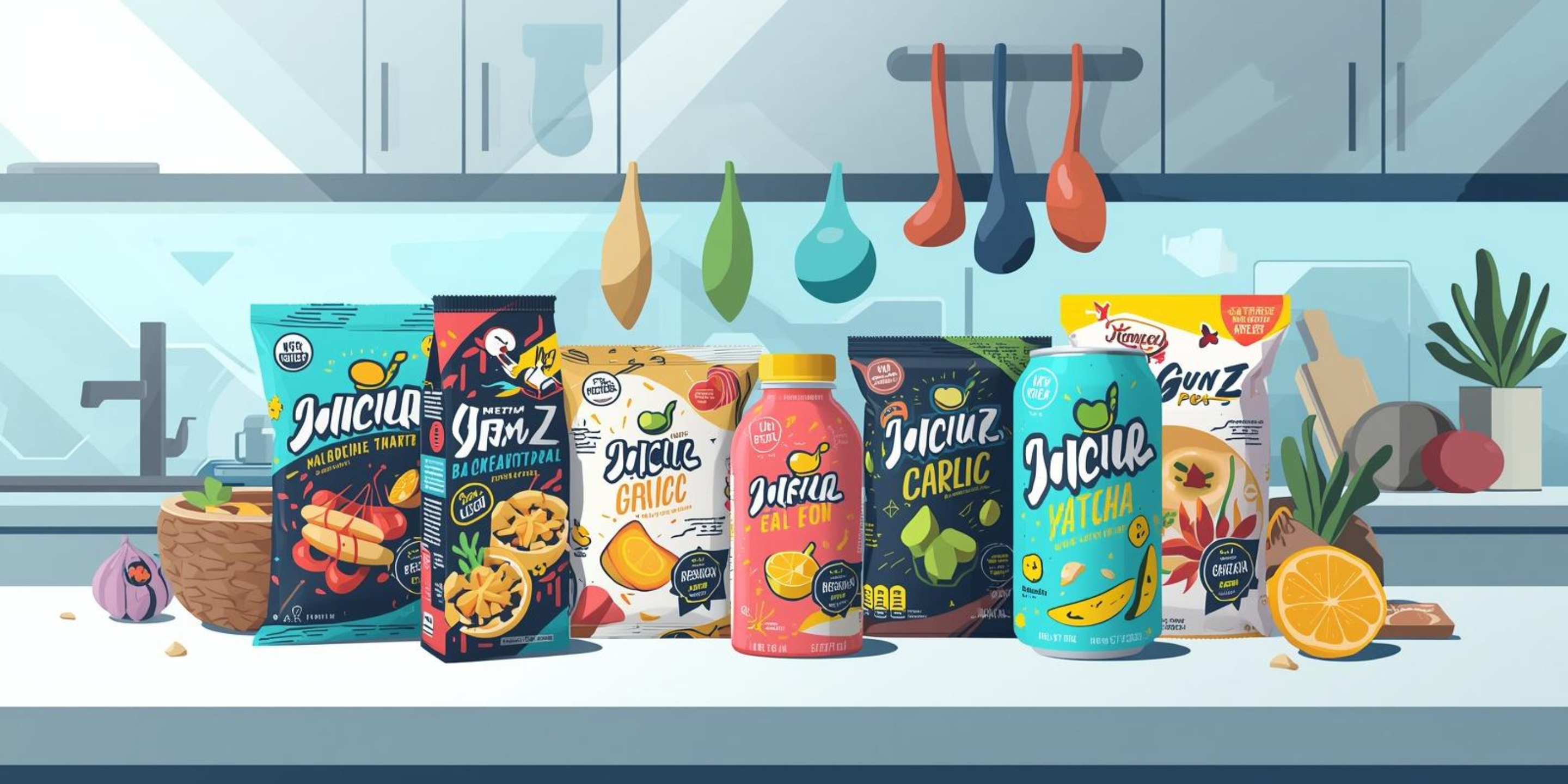
There is a generation actively dismantling the food and beverage industry’s century-old playbook - and most brands are still trying to win them over with loyalty cards and flavour extensions.
Gen Z, born between 1997 and 2012, is no longer an emerging consumer group to be watched. They are the fastest-growing force in food and beverage spending. According to NIQ and World Data Lab, Gen Z spending is set to grow by $2.7 trillion in the years ahead - the fastest per-capita growth of any generation. The global snack market reached $679 billion in retail sales in 2024, per Euromonitor International, growing at 4.2% annually. The global non-alcoholic beverages market stands at $1.29 trillion in 2026, per Mordor Intelligence. Gen Z is the primary driver of both trajectories.
The brands that understand what is actually driving those numbers will build the next decade of category leaders. The ones that don’t will keep launching products that test well in research and die on the shelf.
This is the shift every F&B innovator needs to understand now.
Food Is Identity, Not Just Nourishment
The most important thing to understand about Gen Z’s relationship with food and beverage is that it is not transactional. It is expressive.
In Keurig Dr Pepper’s State of Beverages 2026 Trend Report - drawn from national surveys across YouGov, Ipsos, and Morning Consult - 58% of Gen Z and Gen Alpha consumers say their beverage choice reflects who they are. They are nearly twice as likely as Millennials to choose brands that signal something about them. This is not brand loyalty in the traditional sense. It is identity curation.
58% of Gen Z say their drink reflects who they are. Not what they’re thirsty for. Who they are.
This reframing matters enormously for innovation strategy. When you are building a product for Gen Z, you are not just solving for taste, price, and convenience. You are designing an artifact that they will carry into social spaces, hold up for a camera, share in a feed, and use to communicate something to their network. A can of sparkling water is not a can of sparkling water. It is a statement.
The innovation implication: design for what the product signals, not just what it delivers.
TikTok Is the New Shelf
In previous generations, the grocery aisle was the primary discovery surface for new food and beverage products. For Gen Z, that surface is their phone.
Social media has become the primary discovery engine for food and beverage. According to Keurig Dr Pepper’s 2026 State of Beverages Trend Report, 63% of Gen Z and Gen Alpha say what they see friends, creators, and social feeds drinking directly influences their choices - compared to 48% of Millennials and older. TikTok is the dominant channel, described by Innova Market Insights as the platform where food education largely happens for this generation. The implication for brands is not just that marketing has changed. It is that the innovation pipeline has to change with it.
When a product can go from obscure to sold-out because a single creator posted a 30-second video at 11 pm, the old 18-month development cycle becomes a competitive liability. Success in this environment hinges on brands’ ability to quickly respond to trends, iterate products, and scale rapidly - moving from viral moments to fast product cycles.
The brands winning with Gen Z don’t just chase trends. They build the infrastructure to respond to trends before competitors even see them coming.
This is exactly the argument for structured, system-driven innovation management. Speed without process is reactive. Speed with process is competitive.
Wellness Has Been Redefined - And It Is Not What Brands Expect
For the past decade, ’health’ in F&B meant low-calorie, low-sugar, low-fat. For Gen Z, that framing is almost irrelevant.
Their definition of wellness is broader, more nuanced, and far harder to game. Gen Z is pursuing foods and beverages that support energy, mood, and focus - while still delivering indulgence. The key requirement: health has to feel intuitive, not instructional.
This translates into several concrete trends:
The functional beverage explosion is real. Adaptogens, nootropics, prebiotics, and mood-adjacent ingredients are not niche supplements anymore - they are entering the mainstream through formats Gen Z already reaches for: sodas, sparkling waters, ready-to-drink coffees, energy drinks. According to Chartwells Higher Education’s 2026 Campus Dining Index - drawn from 100,000+ students - high-protein dining is the top priority on campus (28% of students), up 36% year over year.
At the same time, indulgence is not dead. Indulgent food and beverage experiences are strongly linked to ’me-time’ and comfort moments for younger consumers. The opportunity is not wellness or indulgence. It is wellness and indulgence, made to feel like the same thing.
Gen Z doesn’t want to choose between feeling good and tasting good. The brands that force that choice will lose.
Weird Is Winning
Gen Z’s appetite for bold and unfamiliar flavours is well documented. The Hartman Group found that half of Gen Zers actively want more meals with unique flavours or different cuisines. Morning Consult’s data shows Gen Z is 21% more likely than the general population to try a new beverage in any given month. Keurig Dr Pepper’s 2026 Trend Report found that 57% of Gen Z are drawn to globally inspired options and 56% actively seek limited-edition drops. The direction is unambiguous: this generation treats novelty as a baseline expectation, not an optional extra.
The appetite for bold, unexpected, globally inspired flavours is documented across every data source tracking Gen Z consumption. Yuzu. Black garlic. Miso caramel. Shakshuka-inspired breakfast formats. Korean-Mexican fusion. Middle Eastern flavours in Western street food formats. These are not gimmicks. They reflect a generation that grew up with the internet, with global cuisine at their fingertips, with cultural diversity as a baseline expectation rather than a novelty.
The limited-edition mechanic - 56% of Gen Z actively seek these drops per KDP’s 2026 report - creates scarcity and social currency simultaneously. That is exactly the kind of launch strategy that structured innovation pipelines can systematise.
This is a major shift from the risk-averse, core-range-focused innovation that dominated F&B for the past 20 years. Gen Z rewards boldness. Caution reads as irrelevance.
The Sober Curious Generation Is Rewriting Beverage Culture
Perhaps nowhere is Gen Z’s influence more disruptive than in the beverage alcohol category.
The low- and no-alcohol movement is well documented, but what is less understood is the sophistication of what Gen Z wants to replace alcohol with. They are not asking for watered-down versions of adult drinks. They are asking for a new category entirely - one defined by flavour complexity, ritual, mood, and social relevance.
Botanical-forward drinks. Elevated sodas. Functional waters. THC-infused beverages. Natural energy alternatives. What these formats share is not just the absence of alcohol - it is the presence of experience. Gen Z wants drinks that fit into daily life with the same intentionality that a good glass of wine once implied. The occasion still matters. The ritual still matters. Alcohol just doesn’t have to be part of it.
The non-alcoholic beverages market - valued at $1.29 trillion globally in 2026 by Mordor Intelligence - is not growing on the back of a wellness trend. It is being rebuilt from the ground up to serve a generation that has redefined what drinking is for.
What This Means for Innovation Teams
The Gen Z food and beverage opportunity is real, large, and structurally different from what the industry navigated with Millennials. While Gen X currently leads total consumer spending globally (NIQ, 2025), Gen Z is growing its influence at the fastest pace of any generation and will be the defining force in F&B innovation for the decade ahead. But it requires a different innovation operating model to capture it. Five things that have to change:
Consumer signals have to feed into ideation in real time. Waiting for quarterly trend reports is not a strategy when a TikTok format can shift category demand in 72 hours. Innovation management systems need to be wired to external signals - not just internal R&D pipelines.
Portfolio strategy has to account for identity architecture, not just SKU performance. Products are not just items with a margin. They are artifacts in a consumer’s self-expression toolkit. Portfolio decisions have to reflect that.
Speed-to-market has to be a designed capability, not a hoped-for outcome. The brands consistently capturing Gen Z moments have built structured, stage-gate processes specifically optimised for rapid iteration and real-time market responsiveness.
Limited-edition and collaborative launches need to be a formal part of the pipeline, not an exception. The innovation process should be designed to accommodate fast, low-risk, signal-rich drops - not just full-scale commercial launches.
Functionality and indulgence need to be integrated at the concept stage. Not layered on top of an existing product. Designed in from the beginning, with formulation, positioning, and packaging built around the same consumer truth.
Gen Z doesn’t punish brands for being bold. They punish brands for being boring.
The Bottom Line
Gen Z has not just changed what food and drink are popular. They have changed the conditions under which a product can earn relevance at all.
Their demand for authenticity, transparency, boldness, and functional benefit - delivered at the speed of social media and in service of their identity - is not a passing trend to be managed. It is the new operating reality for every brand that wants to build a category position in the next decade.
The F&B companies that will lead in this environment are not the ones with the biggest R&D budgets or the longest shelf presence. They are the ones who have built innovation systems capable of continuously listening to the market, responding with speed and structure, and connecting every product decision back to a real consumer truth.
That is not a creative problem. It is a process problem. And process problems have solutions.
Innovation Cloud helps food and beverage companies build the innovation infrastructure they need to compete at Gen Z speed - from real-time trend capture and rapid ideation pipelines to Phase-Gate governance designed for fast iteration and portfolio-level decision-making.
Schedule a demo: www.innovationcloud.com/page/demo-request.html
Sources
- Keurig Dr Pepper, State of Beverages 2026 Trend Report (May 2026) - primary survey data via YouGov, Ipsos, Morning Consult
- Euromonitor International, World Market for Snacks Report 2025 - $679B global snack retail sales figure
- Mordor Intelligence, Non-alcoholic Beverages Market Report 2026 - $1.29T market size
- NIQ / World Data Lab, Spend Z Report - Gen Z spending trajectory and per-capita growth data
- The Hartman Group, Gen Z Food Trends Research - unique flavour and cuisine appetite data
- Morning Consult via Quad, Marketing to Gen Z: Food Flavor Trends - Gen Z trial behaviour vs general population
- Chartwells Higher Education, 2026 Campus Dining Index (February 2026) - 100,000+ respondents
- Innova Market Insights, Consumer Food Trends in the US 2026 (February 2026)
- Symrise In-Sight, How Gen Z Is Redefining Food and Beverage Culture in 2026 (February 2026)
- Food Dive, The Food and Beverage Trends to Watch in 2026 (January 2026)
- Beverage Industry, Generation Z, Alpha Reshape Beverage Trends (March 2026)
- NIQ, The X Factor: Gen X Consumer Spending Report (July 2025) - generational spending leadership context