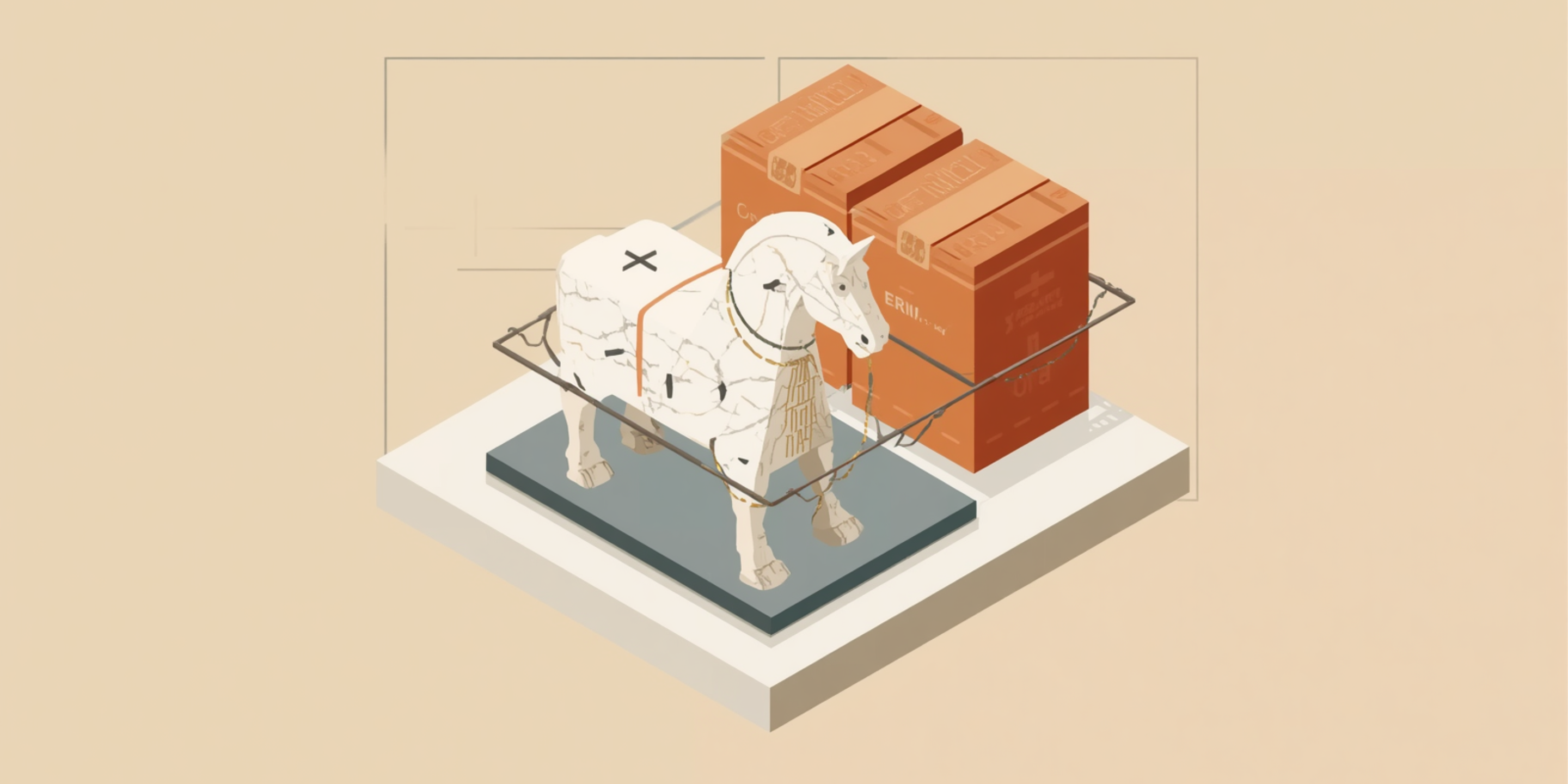
Every culture has stories that warn against the same mistakes: flying too close to the sun, opening the box you were told to leave shut, trusting a gift that turns out to be a trap. These myths have lasted thousands of years because the mistakes they describe are still being made today, just with different props.
Look at some of the most expensive product launch failures in business history, and the myths line up almost exactly. Here are five real cases, and what each one has in common with a story the Greeks or Romans told first.
ICARUS AND THE OVERREACH: NEW COKE
In Greek mythology, Icarus was given wings that worked fine at a safe height. He flew too high anyway, and the wax holding them together melted.
In 1985, Coca-Cola made a similar climb. Facing pressure from Pepsi’s “Pepsi Challenge” campaign, the company reformulated its 99-year-old flagship drink and launched it as New Coke. The decision was backed by real research: Coca-Cola had run roughly 200,000 blind taste tests, and New Coke won. What the testing didn’t capture was how attached customers were to the original. The backlash was immediate and loud, with the company’s hotline flooded with complaints. Just 79 days after the launch, Coca-Cola brought back the original formula under the name Coca-Cola Classic.
The data wasn’t wrong. It was incomplete.
Taste tests measured flavor preference, not brand loyalty, and nobody built a checkpoint to ask the second question before the first answer became a national relaunch.
PROMETHEUS AND THE FIRE NOBODY CONTAINED: THE ARCH DELUXE
Prometheus gave humanity fire before anyone had a plan to control it. It was a powerful gift, and also a serious risk.
McDonald’s Arch Deluxe, launched in 1996, was a similarly ambitious bet with too little containment. The company spent an estimated $200 million marketing a “grown-up” burger aimed at adult tastes, one of the largest single-product ad campaigns fast food had seen at the time. The burger itself wasn’t the problem; the marketing built its entire pitch around alienating McDonald’s core family audience, including ads that showed children recoiling from the sandwich. Franchisees also had to source specialty ingredients that didn’t fit existing kitchen workflows. The Arch Deluxe was pulled from menus by the late 1990s.
Big budgets can fund big mistakes just as easily as big wins.
Ambition needs a gate that asks whether the concept fits the brand’s existing relationship with its customers, not just whether the product itself is well made.
PANDORA’S BOX AND THE CONSEQUENCE NOBODY TESTED FOR: OLESTRA AND WOW! CHIPS
Pandora was told not to open the jar. She did anyway, and every problem that came pouring out was one nobody had prepared for.
Frito-Lay’s WOW! chips, made with Procter & Gamble’s fat substitute olestra, launched in 1998 promising all the taste of regular chips with none of the fat. They briefly became one of the best-selling new snack products in the country. The catch, which the FDA required to be printed on every bag, was that olestra could cause abdominal cramping and loose stools in some people. The agency received more than 20,000 adverse reaction reports tied to olestra, more complaints than for any other food additive on record at the time. Sales, which had reportedly reached the $340 to 400 million range in the launch year, had fallen to roughly $200 million by 2000.
The product delivered exactly what it promised. Nobody had fully reckoned with what else came with it.
A gate built around consumer testing for taste alone will always miss the side effect that only shows up after the product is already on shelves.
THE TROJAN HORSE AND THE TRUSTED NAME IN THE WRONG CATEGORY: COLGATE KITCHEN ENTREES
The Trojans let the wooden horse through their own gates because it looked like a gift from a trusted source. What it actually carried was a mismatch nobody had accounted for.
In the early 1980s, Colgate-Palmolive launched a line of frozen ready meals called Colgate Kitchen Entrees, hoping to use its strong household brand recognition to break into the growing frozen food market. The strategy relied entirely on the Colgate name opening doors that its food expertise hadn’t earned. Consumers, whose only association with the brand was oral care, didn’t make the leap, and the product line was withdrawn.
Brand trust is not a blank check. It travels only as far as the category it was built in.
A phase-gate process exists partly to test that fit before a trusted name gets attached to a product it has no credibility to sell.
MIDAS AND THE CURSE OF TURNING EVERYTHING TO GOLD: COORS ROCKY MOUNTAIN SPARKLING WATER
King Midas wished that everything he touched would turn to gold. The wish worked exactly as asked, and it ruined him, because gold was the wrong outcome for almost everything he touched next.
Coors had genuine equity to draw on: its beer had been marketed for decades on the strength of its Rocky Mountain spring water source. In 1990, the company tried to turn that same equity into a stand-alone product, launching Coors Rocky Mountain Sparkling Water in original, lemon-lime, and cherry flavors, using the same Coors branding and logo. Consumers, primed to associate that name and logo with beer, were confused about whether the water was even alcoholic. Sales stayed weak, and the product was discontinued within a few years.
The brand asset was real. The problem was applying it without asking whether the same golden touch that sold beer would also sell water.
THE BOTTOM LINE
None of these companies lacked talent, funding, or market research capability. Coca-Cola, McDonald’s, Frito-Lay, Colgate, and Coors are among the most sophisticated consumer brands in the world, and each one still shipped a product that failed in a way a structured gate, built to test the specific risk that eventually sank it, could plausibly have caught earlier.
That is the real lesson underneath the myths. Ambition, trend-chasing, and brand confidence are not the enemy of good product development. The absence of a checkpoint built to catch the specific risk each of these products carried is. Every myth here ends in a lesson learned too late. The goal of a well-run phase-gate process is to learn it before the launch, not after.
Innovation Cloud gives product teams the phase-gate infrastructure that catches these risks before launch, not after, with structured stage criteria, governance that has real decision authority, and full visibility across the innovation pipeline.
Schedule a demo: www.innovationcloud.com/page/demo-request.html