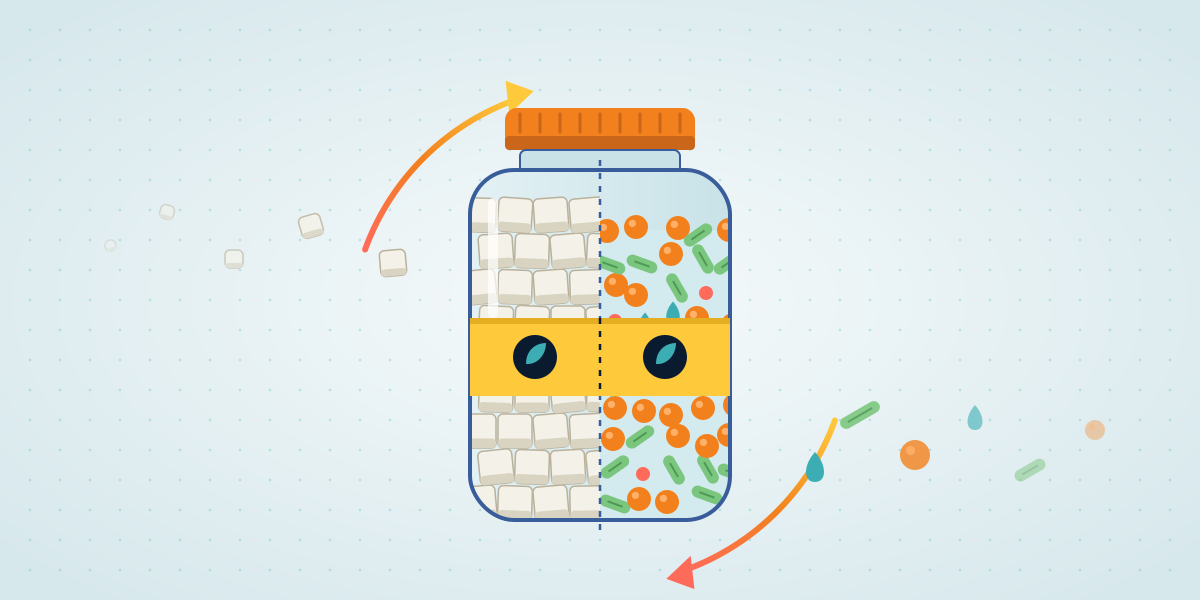
The Same Pack, a Different Product
For decades, the prestige in food and beverage innovation sat with the new launch. A new brand, a new format, a new flavor on the shelf. Reformulation was the quieter job: cutting sugar by a few grams, swapping an ingredient, adjusting a recipe when costs moved.
That balance has flipped. In its Top 10 Food & Beverage Trends 2027 report, Innova Market Insights found that reformulation is accelerating across the sector and increasingly outpacing entirely new product development, as reported by FoodNavigator. Brands are removing ingredients under scrutiny and adding the protein, fiber and other nutrients shoppers now look for.
The products on the shelf may look the same. The work behind them has changed, and most innovation pipelines have not caught up.
Why Renovation Became the Main Event
Four pressures are pushing in the same direction, and all four appear in FoodNavigator’s breakdown of why brands are reformulating.
Shoppers read the label. According to Innova, 59% of consumers globally say they read all or most of the nutrition information on a pack, with sugar, protein and fat drawing the most attention.
GLP-1 medications are changing appetite. People eating less want more from each portion. Research firm Hartman Group, covered by FoodNavigator, argues that reformulating for protein, fiber and portion size is a safer response than adding a new badge to the pack.
Commodities keep moving. Volatile prices for cocoa, coffee and sugar make reformulation a cost lever as much as a health one.
Regulation sets deadlines. Sugar levies and bans on certain dyes leave brands no choice but to change recipes, often across whole portfolios at once.
Why Reformulation Slips Past the Gates
Most phase-gate processes were designed around the new launch. A reformulation looks smaller, so it often runs on a lighter track: an email approval, a spreadsheet, a quick sign-off from R&D and regulatory. That was reasonable when renovation was a fraction of the work. It is risky when it is most of it.
The risks are real, just less visible. A recipe change can shift taste enough to lose loyal buyers. It can touch claims, allergen statements and labels in every market where the product is sold. It can depend on a supplier who also serves three other reformulations running in parallel.
And because reformulations rarely sit in the same portfolio view as new launches, leadership loses sight of where the innovation budget is actually going. If more effort is going into renovation than new products, but only the new products are tracked through gates, the pipeline report describes less than half the story.
If more effort is going into renovation than new products, but only the new products are tracked through gates, the pipeline report describes less than half the story.
Three Ways to Bring Reformulation Into the Pipeline
1Give Renovation Its Own Track, Not a Back Door
A reformulation does not need every gate a new brand needs. It does need some. A right-sized track with two or three gates, covering consumer acceptance, regulatory and label impact, and supply readiness, keeps the work fast without letting it bypass review.
2Put Renovation and Innovation in One Portfolio View
Leadership should be able to see, in one place, how much effort is going into new products versus changing existing ones, and in which categories. Without that view, nobody can tell whether the balance is a strategy or an accident.
3Record What Changed and Why
Every reformulation is a decision to trade one thing for another: cost for taste, sugar for texture, one supplier for another. Capturing the reason, the test results and who approved it means the next team does not repeat the same trial, and the brand can explain its choices if a regulator, retailer or customer asks.
The Bottom Line
New launches will always matter, and the brands that get them right will keep winning shelf space. But much of the 2027 innovation story will be written inside packs that already exist. Less sugar, more protein, a new supplier, a cheaper input.
The question is not whether your teams are reformulating. They almost certainly are. It is whether that work is visible, governed and learning from itself, or running quietly beside the pipeline.
Innovation Cloud runs new product development and reformulation through the same phase-gate process, with right-sized gates, one portfolio view and a full record of every decision and who made it.
Schedule a demo