There is a quiet crisis unfolding in the boardrooms of the world’s largest companies. While 95% of executives rank new product development as their top priority for 2026, nearly half admit their actual progress is lagging.
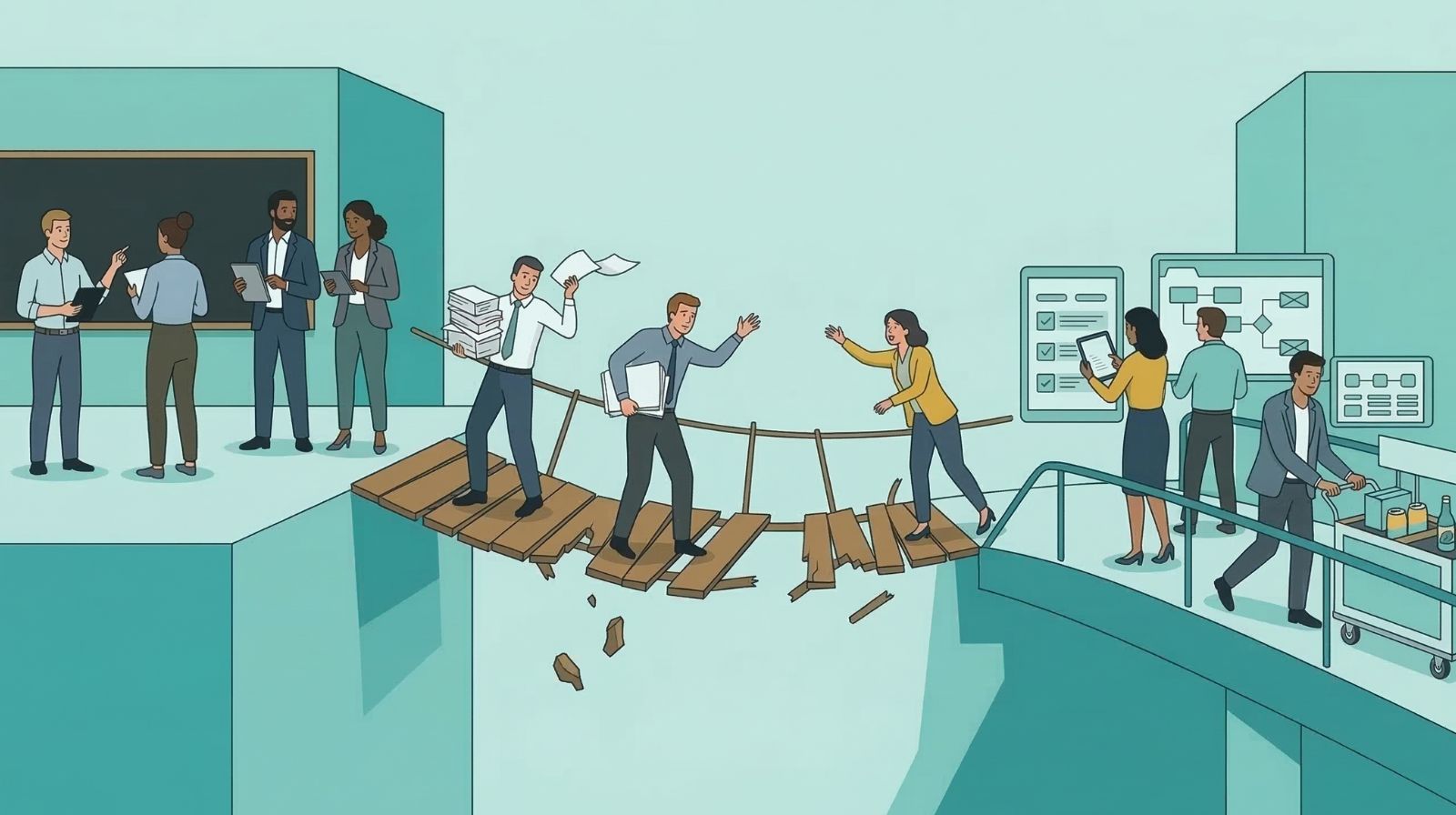
We call it the "Gutenberg Gap." Named after the awkward era when the printing press existed but the world still lived in silos, it describes the chasm between a company’s brilliant vision and its physical ability to ship. In an era where a digital trend can create a new market category in 48 hours, the traditional "manual" method of management is no longer just slow, it’s a liability.
The Ghost in the Machine: Why 70% of R&D Fails
Recent industry data reveals a startling trend: companies are pouring more money into R&D than ever, yet the "time-to-market" metric has actually slowed down for 1 in 3 enterprises.
The culprit isn’t a lack of talent; it’s Fragmented Intelligence.
Most large organizations operate like a relay race where the runners are in different time zones. The ideation team uses one tool, the engineers use another, and the supply chain team is looking at a PDF from last Tuesday. This "fragmentation tax" costs the average enterprise an estimated 20% in lost productivity every year.
From "Project Management" to "Innovation Orchestration"
The buzzword in C-suites for 2026 isn’t just "AI" but Orchestration. Modern leaders are moving away from siloed software toward end-to-end digital backbones that allow them to manage a flow rather than a single project.
These systems act as a central nervous system, connecting the first spark of an idea to the final retail shelf. By having a "single source of truth," high-performing companies can now pivot entire manufacturing lines in weeks rather than years. This shift also marks the death of the "Lone Genius" myth; innovation is no longer a department, it’s a data stream that allows for Category Hopping the ability to use insights from one sector to solve a problem in another, ensuring that no great idea stays locked in a regional silo.
The True Cost of a "No"
Did you know that in a typical manual innovation process, it takes an average of 18 meetings just to kill a bad idea? Modern end-to-end tools use predictive vetting to "fail fast," saving companies millions in "zombie projects" that should have been buried months ago.
The 2026 Blueprint for Growth
For a big company to act with the agility of a startup, the toolkit must change. The winners of this year are those who treat their innovation process as a product itself, investing in:
- Unified Visibility: Knowing exactly where every dollar of R&D is at any second.
- Agile Guardrails: Automated compliance and vetting that doesn’t slow down the creative process.
- Scalable Collaboration: Tools that allow a team in London to co-create with a factory in Mexico in real-time.
The landscape of 2026 doesn’t reward the biggest budget; it rewards the clearest path. As the "Gutenberg Gap" continues to swallow legacy brands, the question for leadership is no longer about what you’re building, but how much of your potential is currently getting lost in the mail.
Is your infrastructure the engine of your growth, or the emergency brake?