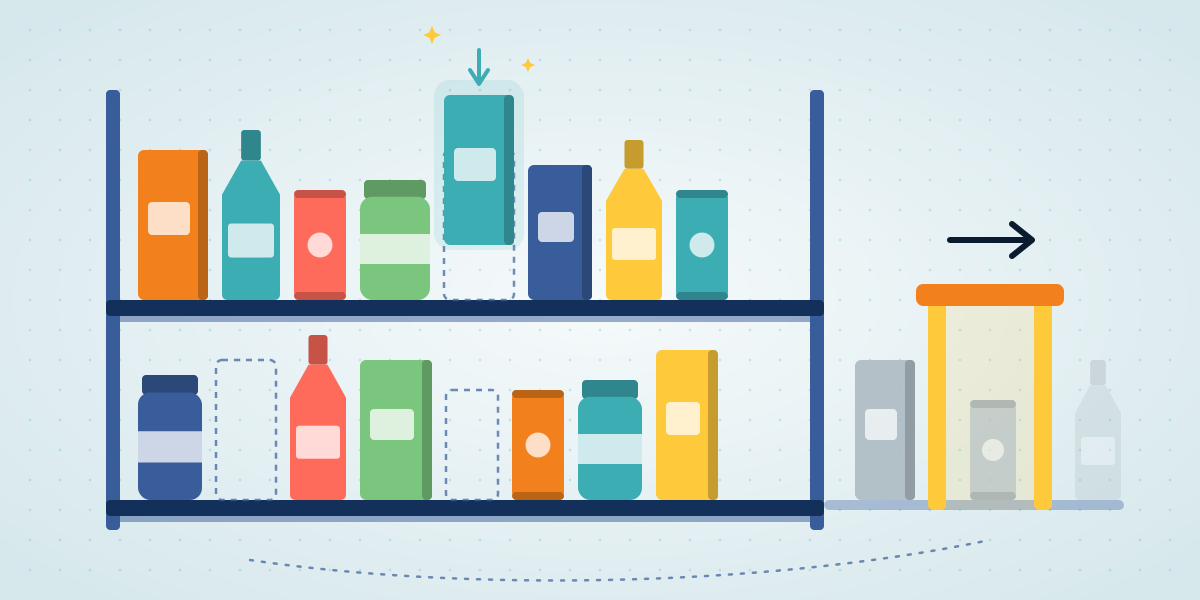
A Pipeline With Only One Direction
A good phase-gate process is very clear about how a product gets in. There is an idea gate, a concept gate, a business case and a launch decision, each with criteria and an owner. After launch, the process usually just stops.
Nobody holds a gate review for a product that has been on shelf for four years and sells a little less every quarter. It stays because removing it takes effort, someone still likes it, and nobody is asked to decide. Multiply that by every flavor extension, pack size and limited edition that quietly became permanent, and you get the long tail.
What the Tail Really Costs
A slow-selling product does not just sell slowly. It takes a production slot, a line in the warehouse, a facing on the shelf and a share of the team’s attention. Each one is small. Together they slow down the products that matter, including the new ones the pipeline is trying to launch.
Hain Celestial is one recent example of a company confronting this. As part of its turnaround, it is targeting the elimination of about 30% of its North American SKUs through fiscal 2027, to improve supply chain efficiency and shelf productivity.
The idea is not new. In 2014, Procter & Gamble announced it would sell or discontinue up to 100 brands. The 70 to 80 brands it kept had delivered about 90% of sales and more than 95% of profit over the previous three years.
Why Pruning Keeps Turning Into a Crisis
Most large pruning programs happen the same way. The tail grows for years, margins come under pressure, and then a turnaround plan cuts a large share of the range in one go. It works, but it is painful: markdowns, delisting talks with retailers, and teams who feel their products were judged in a rush.
The more interesting part of the Hain Celestial story is what it says it will do next. Its CEO described a disciplined portfolio review process to continuously assess, add or retire SKUs, so the company no longer depends on large, occasional clean-ups.
That is the shift worth copying. Retiring products should be a routine decision in the pipeline, not an emergency measure in a turnaround.
Retiring products should be a routine decision in the pipeline, not an emergency measure in a turnaround.
Three Ways to Build an Exit Gate
1Set the Exit Criteria at Launch
The best time to decide when a product should leave is before it arrives. At the launch gate, agree on what success looks like after one, two and three years: velocity, margin, distribution. If a product misses those marks, the review is automatic, not personal.
2Review the Live Portfolio on a Schedule
Put every product on shelf through a short review once or twice a year, with the same discipline as a gate. Keep, fix, reformulate or retire. Most will pass in minutes. The few that do not get a real decision instead of years of drift.
3Treat Retirement as Freed Capacity
Every retired product frees a production slot, shelf space and team time. Make that visible in the portfolio view, next to the new projects waiting for exactly those resources. When people can see what a retirement makes possible, the decision stops feeling like a loss.
The Bottom Line
Innovation is usually measured by what a company launches. It should also be measured by what it has the discipline to stop. A portfolio that only grows eventually slows down everything inside it, including the next big idea.
The phase-gate model already gives teams the habit of checking work before it goes further. An exit gate simply applies that habit to the other end of the product’s life.
Innovation Cloud gives innovation teams one view of the whole portfolio, clear decision rights at every gate and a complete record of what was decided and why, from the first idea to the decision to retire.