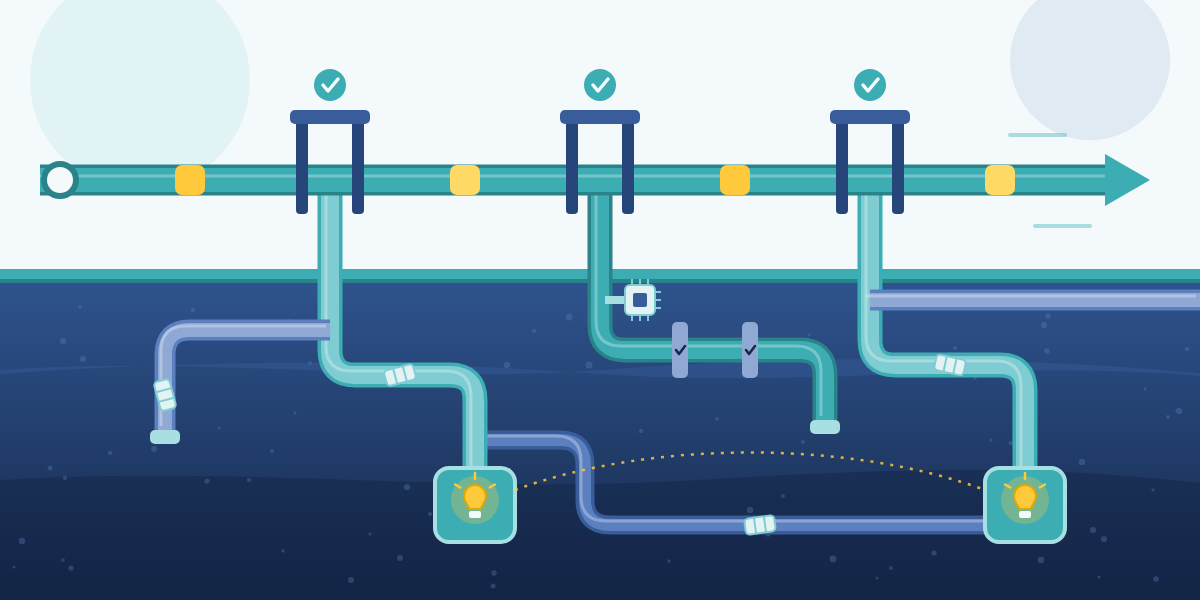
Software teams have a name for the shortcuts that pile up when code ships faster than anyone documents it: technical debt. Nobody notices it on a good day. Everyone notices it the day a small change breaks something nobody remembers building. Innovation pipelines are building the same kind of debt right now, and almost nobody is tracking it.
The signs are easy to miss because each one looks small on its own. A new AI tool gets added to speed up market scans. A regional team starts running its own version of the gate process because the global one felt too slow. Two related projects launch in different business units without either team knowing about the other. None of these decisions is wrong by itself. Added together, over two or three years, they leave a company with a pipeline that looks fast on paper and confused underneath.
What Innovation Debt Actually Looks Like
Technical debt shows up as bugs. Innovation debt shows up as questions nobody can answer quickly:
- Why did this project pass its last gate?
- Who actually owns the decision to kill it?
- Which version of the target market numbers is the current one?
These questions were once easy to answer. They become difficult when a pipeline grows beyond what one person, or one shared document, can keep in view.
Where It Comes From
Three forces are adding to this debt faster than many companies can reduce it. Faster development cycles make it possible to run more projects at once. AI tools, and now AI agents, are entering the process faster than policies can govern them. Meanwhile, acquisitions and reorganizations bring together teams that have built their own versions of the same process, often without anyone responsible for reconciling them.
Three Warning Signs Worth Checking For
1. No One Can Explain Why a Project Passed
If a gate decision from six months ago cannot be reconstructed from the record in under ten minutes, the debt is already building up. The gate did its job at the time. Nobody can prove it now.
2. The Same Idea Gets Funded Twice
Two teams building near-identical concepts without knowing about each other is not a sign of great instincts across the company. It is a sign that the pipeline’s visibility has not kept up with its size.
3. The Numbers Do Not Agree
When the innovation dashboard, the finance report, and the regional team’s spreadsheet all show a different figure for the same metric, the problem is not the metric. It is that data is entering the pipeline from more places than the governance was built to reconcile.
How to Pay It Down
Paying down innovation debt does not require pausing the pipeline to rebuild it, just as a good engineering team does not stop shipping to rewrite everything at once. It means picking the two or three points causing the most confusion, usually gate documentation and decision ownership, and fixing those first. A single, structured record of what happened at each gate and who decided it removes most of the guesswork within a quarter. Everything else can wait its turn.
Debt is not a reason to panic. It is a reason to look.
The Bottom Line
Debt is not a reason to panic. It is a reason to look. The companies that get hurt by this are not the ones with the most debt. They are the ones that find out how much they had during a board review, an audit, or a due diligence process, instead of on a normal Tuesday, when fixing it was still cheap.